At the heart of the football pitch, a torn anterior cruciate ligament (ACL) remains an injury synonymous with a major turning point for many players. This ligament, the pillar of knee stability, is a frequent target of decisive injuries that can jeopardize a sometimes flamboyant sporting career. Despite the technological and medical advances of recent years, this condition remains a major challenge. Not only does it require a prolonged layoff, but it also raises concerns about long-term repercussions on athletes’ quality of life. In 2025, understanding the mechanisms, treatments, and especially prevention methods surrounding this injury remains more than ever a priority for players and medical teams. Brands like Nike, Adidas, and Puma, committed to sports innovation, have integrated these considerations into the development of their equipment to reduce risks. Professional and amateur football is thus at a crossroads between performance and physical preservation.
Football, a sport with intense physical demands, requires players to constantly change direction, jump, lean, and sometimes withstand sudden contact. These factors place the anterior cruciate ligament at the center of often intense mechanical stress. Among musculoskeletal injuries, its rupture is undoubtedly the most feared due to its potential to compromise the functional integrity of the knee. Associated with acute pain, a feeling of instability, and rapid swelling, it requires rapid and appropriate treatment. Some famous cases of footballers who have endured this ordeal illustrate both the technical sophistication of modern treatments and the uncertainties surrounding the long-term aftereffects that can follow. Whether through arthroscopic surgery or rehabilitation programs combining muscle strengthening and proprioceptive work, the challenge remains immense and raises significant issues in any sporting career.
In this complex context, the risk factors causing this injury are not limited solely to physical contact or sudden movements. They also encompass the environment, the quality of the pitch, the type of shoes used—where brands like Under Armour and Reebok are innovating to offer optimized models—as well as the physical and mental preparation of the player. Prevention programs, now integrated into many clubs, combine specific exercises, biomechanical analysis, and assistive technologies to limit danger while optimizing performance. This proactive approach is essential to protect future generations and ensure the longevity of careers. A constant battle, where intelligence of the game is combined with mastery of physical risks.

Understanding anterior cruciate ligament tears in soccer players: definition and implications
An anterior cruciate ligament (ACL) tear is a serious injury affecting one of the structures essential to knee stability. Located at the heart of this joint, the ACL connects the femur to the tibia and regulates rotation and extension movements. Its failure causes instability, often felt acutely and immediately, directly impacting the player’s mobility.
In soccer, this injury represents a critical moment, where the athlete often has to interrupt their career for several months. The knee, deprived of the support of the ACL, becomes vulnerable during dynamic phases of the game, such as pivots, sprints, or landings after a jump. A complete tear often requires surgical reconstruction followed by rigorous rehabilitation to restore lost function. The effort required to return to the highest level is considerable, which explains why a cruciate ligament tear represents much more than a simple medical problem: it is a true psychological and physical ordeal, illustrating a rich history of resilience or, sometimes, a failed career.
The Key Roles of the Anterior Cruciate Ligament in Knee Stability
The ACL plays a crucial role in the stability of the knee joint, preventing excessive movements that can cause damage. Its main functions are:
- 🔹 Constraining the anterior translation of the tibia relative to the femur.
- 🔹 Limiting internal and external rotation of the tibia.
- 🔹 Allow controlled and safe knee flexion and extension.
In the event of a rupture, knee stability is compromised, rendering the player unable to perform certain technical movements without experiencing instability or pain.
The seriousness of the injury for a footballer’s career
In the world of football, every movement must be executed with precision and confidence. A torn cruciate ligament often deprives the player of this mastery, leaving them with a constant fear of recurrence or aggravating complications. The recovery time, often between six and twelve months, corresponds to prolonged time off the pitch. This period, while necessary, is also a trying experience that can take a toll on the player mentally, especially if they play for an ambitious team. https://www.youtube.com/watch?v=ndulH_o2jFg
🔎 Appearance
| 🔧 Role / Impact | Knee stability |
|---|---|
| Prevention of excessive displacement of the tibia relative to the femur | Movement |
| Painless rotation and flexion-extension control | Performance |
| Ability to perform quick and precise technical movements | Prevention of complications |
| Limiting the long-term risks of osteoarthritis | Common causes of cruciate ligament rupture in football |
Anterior cruciate ligament tears often occur in specific contexts related to the physical demands of football. Analyzing these factors helps us better understand risk situations and guide prevention efforts. Sudden movements and the very nature of the game account for a large proportion of injuries.
Mechanical movements causing the injury
Several mechanisms are associated with an ACL tear, including:
⚡
- Sudden changes of direction: During a dribble, pivot, or defensive retreat, one foot may remain fixed to the ground while the body rotates, straining the ligament. ⚡
- Poorly controlled landing: Poor support after jumping for a header or aerial duel can lead to excessive twisting. ⚡
- Sudden physical contact: Unexpected tackles or impacts can cause a direct tear through impact. ⚡
- Repeated twisting and excessive strain: An accumulation of microtraumas gradually weakens the ligament. Additional Factors Increasing the Risk Certain factors influence the likelihood of a rupture:
👟
Unsuitable Equipment:
- Poorly chosen footwear, such as studs that are too long or worn, can cause the foot to become trapped. Brands such as Asics, Mizuno, Umbro, and Kappa offer specific models for different terrains. 🏟️ Ground Conditions:
- A hard or uneven pitch increases stress on the knee. 💪 Inadequate Physical Training:
- A lack of muscle strengthening or poor recovery increases the risk. 🧠 Fatigue and Reduced Alertness:
- Impaired concentration weakens the ability to master complex movements. ⚙️ Cause 🎯 Description 🛡️ Prevention
| Rapid change of direction | Fixed foot, sudden body rotation | Adapted pivot techniques, proprioception |
|---|---|---|
| Unbalanced landing | Poor support during a jump | Control of the jump and landing |
| Direct contact / tackle | Violent impact on the knee | Compliance with rules, tackling training |
| Repeated twisting | Successive microtraumas | Targeted muscle strengthening |
| Learn everything about the ACL (anterior cruciate ligament): causes, symptoms, prevention, and treatment of injuries to regain performance and safety in your sports. | These factors create a context of constant risk that justifies the attention paid to prevention within clubs, including education programs and training players in safe movement. To learn more about protection methods, it is recommended to consult the dedicated resources available at | uscca-foot.fr |

Symptoms and diagnosis: quickly recognizing a cruciate ligament injury Detecting a cruciate ligament tear is a crucial step in quickly initiating appropriate treatment. Warning signs are generally pronounced, although the severity is only confirmed after a medical diagnosis. Immediate symptoms experienced by the playerAt the precise moment of the rupture, several symptoms appear:
🔔
Audible cracking:
Many players report a distinct, popping sound when the injury occurs.
🔔
- Sensation of dislocation or giving way: The knee seems to suddenly lose its stability. 🔔
- Intense and immediate pain: Which often limits all mobility. 🔔
- Rapid swelling: The knee develops edema caused by the hemarthrosis. Clinical examinations and medical imaging
- The specialist first performs physical tests, such as: ✔️ Lachman test:
Assessment of anterior knee laxity.
✔️
- Anterior drawer test: Detection of abnormal displacement of the tibia. These tests can help determine the need for medical imaging: 🔍
- MRI: Preferred method for accurately visualizing the tear and associated injuries, particularly meniscus or bone injuries. 🔍
X-ray:
- Sometimes used to check bone integrity, but insufficient for the ACL. 👁️ Examination 🔑 Purpose
- ✔️ Indication Clinical test (Lachman, anterior drawer) Detect ligament laxity
| First examination after trauma | MRI | Visualize the rupture and associated injuries |
|---|---|---|
| Diagnostic confirmation | X-ray | Check bone structure |
| Rule out associated fractures | https://www.youtube.com/watch?v=tn4yya9jeMU | A rapid diagnosis is a determining factor in providing effective treatment, reducing subsequent complications. It also allows for the best strategy to be considered, between conservative treatment and surgery. |
| Medical and surgical treatments for cruciate ligament rupture | Faced with a cruciate ligament rupture, the treatment options are multiple but depend primarily on the severity of the injury, the player’s age, athletic ability, and goals. A successful return to play requires appropriate, often personalized, care. | Functional treatment: when rehabilitation is enough |
🛠️ Develop the muscles around the knee (quadriceps, hamstrings, calves).
🛠️ Improve proprioception, strengthening the player’s ability to sense the position of their knee.
🛠️ Promote a gradual return to activities without major instability.
This method, often reserved for recreational players, older adults, or those whose activity does not place significant strain on their knee, may not be sufficient for elite athletes. It has the advantage of avoiding surgery and its risks, but does not guarantee complete stability.
Surgical Treatment: Cruciate Ligament Reconstruction
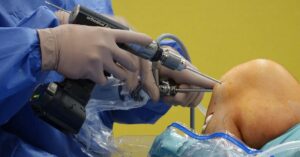
- For most professional football players, a surgical procedure called ligament reconstruction is recommended. Performed arthroscopically, this technique involves:
- 🔧 Harvesting a tendon transplant, usually from the player’s own patellar tendon or hamstring.
- 🔧 Anatomically reconstructing the cruciate ligament to restore stability.
🔧 Minimizing hospital stays and maximizing precision thanks to arthroscopic vision.
Surgery is generally followed by a lengthy rehabilitation program, which can last several months, with the goal of a safe return to competition at the end of the procedure. Clubs and equipment manufacturers such as New Balance and Adidas offer specially designed equipment to support this crucial phase. ⚖️ Treatment Type
✅ Advantages
- ❌ Disadvantages
- Functional Treatment
- Avoids surgery, less invasive
Less reliable stability, risk of recurrence
| Surgical Treatment | Restores stability, better for athletes | Invasive procedure, long recovery |
|---|---|---|
| Effective Strategies to Prevent Cruciate Ligament Tears in Soccer Players | Prevention is undoubtedly the best weapon to limit the incidence of this dramatic injury. In soccer, several practices are now recognized to contribute to the protection of the cruciate ligaments. | Main Pillars of Ligament Prevention |
| Prevention efforts are primarily based on: | 🧊 | Complete and progressive warm-up: |
essential muscle and joint preparation.
💪
Targeted muscle strengthening:
quadriceps, hamstrings, glutes, hips to stabilize the knee. 👟
- Suitable choice of footwear: Brands such as Puma and Reebok offer models optimized to reduce risks. ⚽
- Learning safe playing techniques: Mastery of jumps, landings, and pivots. 🔄
- Implementation of specific prevention programs: including proprioception and neuromuscular control exercises. Example of a recommended prevention program
- An effective program may include: 📋 Dynamic warm-up exercises (light running, specific stretches). 📋 Muscle strengthening with squats, lunges, and core exercises.
- 📋 Jumping exercises with controlled landings. 📋 Proprioception with a balance board or unstable surfaces. 📋 Coaching sessions to improve pivot technique and posture.
Discover everything you need to know about the ACL (anterior cruciate ligament), its functions, common injuries, treatments, and rehabilitation tips for effective recovery.
Clubs at all levels, both amateur and professional, are encouraged to incorporate these practices into their daily routine. This rigorous monitoring is all the more necessary in a highly competitive environment. To further explore these strategies, it is recommended to consult available prevention resources.
- 🛡️ Method
- 🎯 Objective
- 📅 Recommended Frequency
- Dynamic Warm-up
- Prepare muscles and joints

Targeted muscle strengthening Strengthen knee stability2 to 3 times per week
| Proprioceptive exercises | Improve neuromuscular control | 1 to 2 times per week |
|---|---|---|
| Technical training | Correct risky movements | Regularly during the season |
| Frequently asked questions about ACL tears in football | Which players are most at risk for ACL tears? | Players who play at high intensity, particularly those in positions requiring rapid changes of direction or aerial duels, are particularly at risk. Furthermore, young players in the midst of muscle development must be vigilant. |
| Does a torn cruciate ligament mean the end of your career? | Not necessarily. Thanks to surgical advances and modern rehabilitation, many footballers manage to return to competitive levels. However, adhering to rehabilitation protocols is crucial to maximize their chances of returning. | How to choose boots to reduce the risk of knee injury? |
| The choice must be adapted to the type of pitch and the player’s build. Brands like Nike, Adidas, Puma, and New Balance offer specific models incorporating technologies to optimize grip and mobility, thus reducing the risk of twisting. | What is the average recovery time after an ACL reconstruction? | The time varies depending on the severity and response to treatment, generally between six and twelve months. The rehabilitation phase is intense and progressive to avoid complications and prepare for an effective return. |
Where can I find reliable advice for the prevention and management of this injury? Specialized platforms such as
uscca-foot.fr
offer a wealth of information tailored to the needs of football players, coaches, and medical staff, ensuring optimal monitoring.