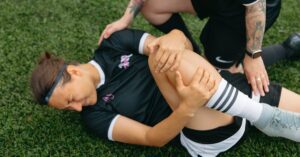
Football, a universally beloved sport, brings together millions of fans across the globe. However, the physical intensity and frequent interactions between players expose them to a high risk of injury. Whether it’s iconic figures like Djibril Cissé or landmark events like Materazzi’s chest injury in the 2006 World Cup final, each season highlights the crucial importance of injury prevention. Despite the rise of modern equipment offered by brands like Nike, Adidas, and Puma, and innovations in playing surfaces, the right balance between physical preparation, technique, and recovery remains the key to minimizing the impact of injuries.
Injuries in football manifest in forms as diverse as ankle sprains, cruciate ligament tears, and muscle injuries, particularly affecting the lower body. The role of training, as well as mental management, is thus increasingly important for both professional and amateur players. By 2025, a detailed understanding of the mechanisms of these injuries, combined with a comprehensive prevention and treatment strategy, is essential to enhance athletes’ longevity and performance. This article explores the most common types of injuries, the best treatment methods, and, above all, effective practices to avoid these inconveniences in daily football practice.
Frequency and Causes of Football Injuries: Key Factors to Know to Play Better
Football, an intensely physical sport, is inherently prone to injury. Regular practice exposes players to a cocktail of intrinsic and extrinsic factors that increase the risk of injury. Among these, the physical nature of the sport is undoubtedly the most obvious: repeated contact, tackling, and jumping place significant demands on the body, particularly the lower body. The importance of warming up is thus fully felt, as a lack of or inadequate warm-up is a major cause of muscle and joint injuries.
Furthermore, the player’s overall preparation, including their lifestyle, appears to be a key factor. A lack of sleep, an unbalanced diet, or even neglected recovery weaken muscles and ligaments. The condition of the pitches is also a significant factor, particularly synthetic surfaces, which can aggravate impacts. To learn more about this topic, discover the complete analysis available on the dangers of synthetic pitches in football. To better understand these factors, here are the main factors that increase the frequency of injuries: ⚠️Intense physical contact
related to tackles, duels, and collisions
- ⚠️ Lack of warm-up or incomplete warm-up reducing muscle flexibility
- ⚠️ Inadequate pitch conditions and equipment such as unsuitable footwear or uneven surfaces
- ⚠️ Poor physical and mental preparation associated with poor recovery
- ⚠️ Excessive training load, especially among young players in the growth phase
- The most exposed areas of the body are the lower body, particularly the ankles, knees, and hamstrings. These areas are subject to the greatest stress during weight-bearing changes and repeated impacts. The prevalence of injuries in these areas is demonstrated by alarming statistics. Indeed, it is estimated that between 10 and 35 injuries occur per 1,000 hours of play, highlighting the urgent need for preventive measures. Body Area ⚽ Common Injury Type 🩺Aggravating Factors ❗
Notable Example 📌 AnkleSprain, fracture, dislocation
| Impact, poor footing, unstable surface | Article on ankle sprain | Knee | ACL tear, sprain, dislocation |
|---|---|---|---|
| Sudden change of direction, direct impact | Acruciate ligament tear | Musculature (Hamstrings, quadriceps) | Strains, strains, tears |
| Intense exertion, muscle fatigue | Common among professional players | Discover everything you need to know about football injuries: causes, prevention, and treatment. Learn about the most common types of injuries and how players can reduce their risk while staying fit on the pitch. | Specific Equipment Factors to Reduce Risk |
| Equipment plays a fundamental role in player safety. Boots, offered by brands such as Under Armour, Mizuno, or Decathlon, must be chosen based on the playing surface, body shape, and position. For example, a fast forward will need different studs than a defender to prevent slipping injuries. Protective equipment such as shin guards has also evolved. Today, lighter and more adaptable equipment, such as those designed by Uhlsport or Kappa, is available. | provide better shock absorption while respecting the player’s mobility. Good equipment is an essential step in prevention, further enhanced by the adoption of pitch quality control protocols. | https://www.youtube.com/watch?v=bXXS6jJ_Ae8 | The Most Common Football Injuries: Identification and Practical Solutions |

Ankle Sprains: A Pitch Classic
Ankle sprains are undoubtedly the most common injury, caused by poor footing, an ill-controlled tackle, or a collision. The mechanism involves violent distortion of the ligaments, causing pain, swelling, and even instability. Initial treatment is based on the RICE protocol: rest, ice, compression, and elevation, combined with appropriate functional rehabilitation. Specific balance and muscle strengthening exercises help prevent recurrence. Anterior cruciate ligament (ACL) tears: more than an injury, a challengeAn ACL tear is feared for its severity. Often related to a sudden change of direction or a direct impact, this injury frequently requires surgery followed by lengthy and rigorous rehabilitation. Returning to play can take several months, with the ever-present risk of recurrence. To learn more about this major injury, see a link to a dedicated article.Muscle injuries: from strain to tear Muscles such as the hamstrings are constantly put under strain. Muscle tears or strains often result from overuse or insufficient preparation. Treatment combines rest, physical therapy, and progressive strengthening. The risk of relapse warrants special attention upon resuming exercise. Injury Type 🩺Common Causes ⚡
Key Treatment 💊 Average Length of Injury ⏳ Ankle Sprain Poor Footwork, Tackle RICE + Rehabilitation
ACL Rupture
Abrupt Change of Direction
Surgery + Rehabilitation
6 to 9 Months
Muscle Trauma
Overuse, Fatigue
Rest + Physiotherapy 1 to 3 MonthsFractures (Ankle, Tibia)
Direct Impact
Immobilization, Surgery
| 3 to 6 Months | Management of Complex Injuries: Dislocations and Fractures | When the injury goes beyond the muscular or ligamentous stage, such as a shoulder or knee dislocation, immediate medical intervention is essential. Fractures generally require surgery and a long period of immobilization, compromising a rapid return to the field. The importance of an accurate and rapid diagnosis cannot be underestimated. Discover everything you need to know about football injuries: common types, prevention, treatment, and recovery tips to keep players in top form on the pitch. | Psychological Impact of Injuries in Footballers and Support Strategies |
|---|---|---|---|
| An injury often goes beyond the physical aspect to profoundly affect the mental aspect. Loss of confidence, fear of recurrence, and sometimes discouragement accumulate, slowing recovery and lastingly affecting a career. | Injury-related depression, especially in cases of prolonged layoffs, also affects players’ social lives. Isolation can set in, weakening morale and reducing motivation. Players should therefore be encouraged to express their emotions, relying on those around them, the team, and possibly professionals. | Here is a list of recommended strategies to support a mentally injured player: | 🗣️ Encourage speaking and sharing to verbalize emotions |
| 🤝 Maintain connection with the team and loved ones to avoid isolation | ⏳ Take time, respect the rehabilitation process | ⚽ Adapt playing style and goals to progress despite the injury | 🧠 Work on confidence and mental preparation with a professional |
| The richness of these approaches illustrates that injury management is a holistic approach, where the mental aspect plays as important a role as physical rehabilitation. To learn more about appropriate solutions, see the article « Morale and Football — Causes and Solutions. » https://www.youtube.com/watch?v=A4aCga9U2Kc | Soccer Injury Prevention: Essential Programs and Equipment | It is unanimously recognized that prevention is the cornerstone for limiting the occurrence of soccer injuries. A structured program tailored to the players’ needs can improve muscle strength, joint flexibility, and motor coordination. | The warm-up process is one of the crucial elements. The following exercises are recommended: |
| 🏃♂️ Light running for 5 to 10 minutes to increase body temperature | 🔄 Dynamic stretches such as lunges, trunk rotations, and leg swings | 📈 High knees and heel-to-buttocks to activate the quadriceps and hamstrings | ↔️ Side steps to warm up the adductors and work on coordination |
⚡ Short sprints (2-3 repetitions of 10 meters) to prepare muscles for intense efforts.
Specific muscle strengthening, depending on the position and the player’s profile, is also essential. It improves stability and the ability to absorb impacts. For this step, brands such as Reebok and Under Armour offer equipment adapted to athletic fitness.

Objective 🎯
Example of action ✅
Equipment reference 🔧
Complete warm-up
- Prepare muscles and joints
- Light running + dynamic stretching
- Nike, Adidas
- Targeted strengthening
- Stabilize and protect
Position-specific exercises Reebok, Under ArmourEquipment selection
Suitable shoes and shin guards
Mizuno, Puma, Uhlsport
Load management
- Avoid excessive fatigue
- Alternate training/rest
- Kappa, Joma
- The coach’s role is essential in adapting training volume and preventing overexertion, especially in young players learning to play. Careful monitoring of warning signs, such as persistent pain or limping, is essential for rapid intervention. This topic is detailed in
- injury prevention in soccer players. Discover everything you need to know about soccer injuries: common types, prevention, treatments, and tips for staying in shape on the pitch.
Specific prevention for young players Young athletes’ bodies are growing, making their management even more delicate. To reduce risks, it is essential to adapt training programs and establish a rigorous balance between effort and rest. Parents and supervisors must be attentive to the appearance of persistent pain and encourage prompt medical attention. Experienced coaches play a key role in distributing roles within the team, allowing young players to flourish without overloading their joints. Appropriate support promotes harmonious development and produces players who can confidently progress to the highest level. FAQs on soccer injuries: articles and prevention – USCCA What are the warning signs of a serious soccer injury?
Persistent pain, significant swelling, loss of mobility, and limping are warning signs that should prompt urgent medical attention. How to choose the right soccer shoes to avoid injuries? It is important to select shoes that are suited to the playing surface (natural or synthetic), the shape of the foot, and the type of position. Brands like Mizuno, Nike, and Puma offer a wide range that meets current requirements.How important is warming up before a match or training session? Warming up increases body temperature and improves muscle and joint flexibility, thus significantly reducing the risk of strains and sprains. Can a psychological injury delay a return to play? Yes, fear of recurrence and decreased confidence are major obstacles. Psychological support and maintaining a strong bond with the team are essential to optimize recovery.What protective equipment is mandatory in competition?
| Shin guards are a must. Choosing high-performance models from Uhlsport or Kappa can make all the difference in terms of protection and comfort. | |||
|---|---|---|---|